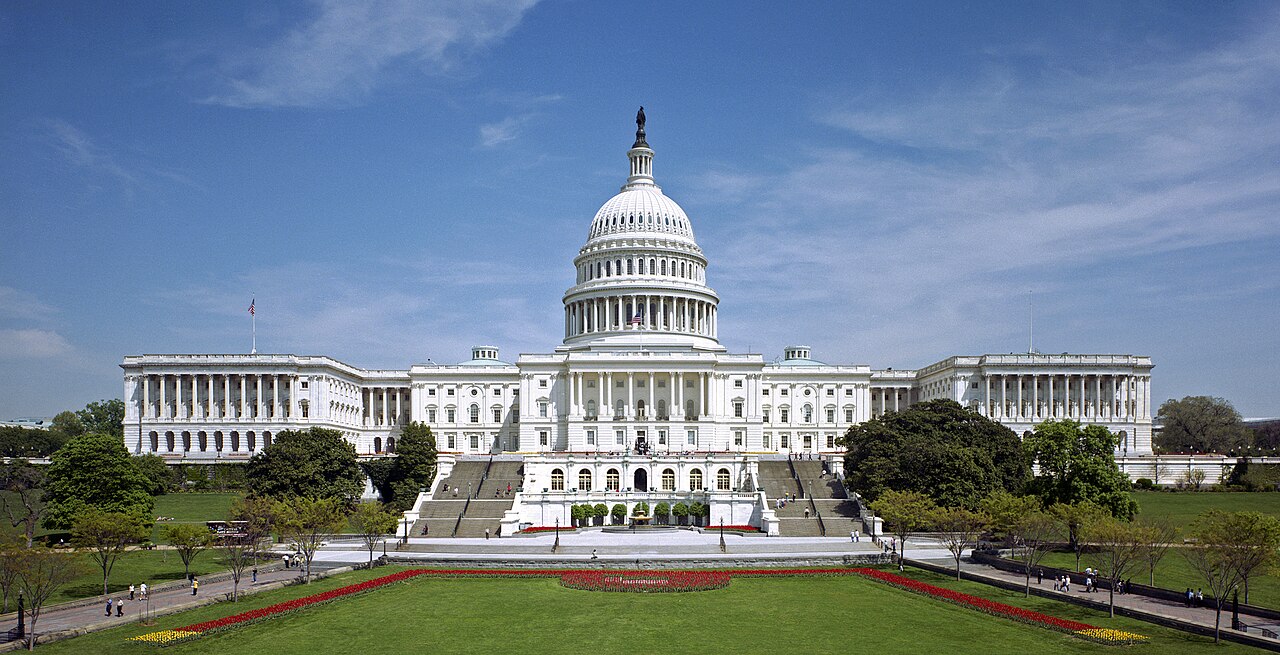
Introduced the following bill
A Bill to establish the Fuel-Smart Vehicle Rebate and Efficiency Program
Project website: https://yangkeshu.github.io/fuel-smart-america-act/
Be it enacted by the House of Representatives and the United States Senate in Congress assembled, that:
Purpose & Goals
I chose this topic because people should be able to spend less on gas without being told exactly what kind of car to buy. Even though new vehicles averaged 27.2 miles per gallon in model year 2024, Americans still used about 136.72 billion gallons of gasoline in 2025, and federal clean-vehicle purchase credits ended for vehicles acquired after September 30, 2025. The purpose of this Act is to make fuel-efficient vehicles more affordable through rebates, gradual efficiency standards, and public reporting while still letting drivers choose the vehicle and technology that fit their needs.
Section 1 — Short Title, Findings, and Effective Date
(a) Short title. This Act may be cited as the “Fuel-Smart America Act.”
(b) Findings. Congress finds that improved fuel economy can reduce the amount families spend on fuel, decrease national petroleum demand, and encourage manufacturers to compete through efficiency and innovation.
(c) Consumer choice. Nothing in this Act requires an individual to purchase an electric vehicle, hybrid vehicle, or any other specific technology. A gasoline, diesel, hybrid, plug-in hybrid, fuel-cell, or battery-electric vehicle may qualify if it meets the same efficiency and price requirements.
(d) Effective date. Rulemaking shall begin within 180 days after enactment. Consumer rebates and vehicle fees shall begin on January 1, 2028.
Section 2 — Definitions
(a) Covered vehicle. A new passenger car or light-duty truck with a gross vehicle weight rating of not more than 10,000 pounds that is manufactured primarily for use on public streets, roads, and highways.
(b) Qualifying new vehicle. A covered vehicle purchased for personal use, with a manufacturer’s suggested retail price not exceeding $55,000 for a passenger car or $80,000 for a light-duty truck, that achieves at least 40 mpg combined or 90 MPGe for model years 2028–2031, at least 45 mpg or 100 MPGe for model years 2032–2034, and at least 50 mpg or 110 MPGe beginning in model year 2035.
(c) Qualifying used vehicle. A covered vehicle at least two model years old, priced at no more than $25,000, that has not previously received a used-vehicle rebate under this Act and achieves at least 35 mpg combined or 75 MPGe.
(d) Eligible buyer. An individual whose modified adjusted gross income does not exceed $150,000 for a single filer, $225,000 for a head of household, or $300,000 for a joint return. Used-vehicle limits are one-half of these amounts.
(e) Low- or moderate-income buyer. An eligible buyer whose modified adjusted gross income does not exceed $75,000 for a single filer, $112,500 for a head of household, or $150,000 for a joint return.
Section 3 — Fuel-Smart Consumer Rebates
(a) New vehicles. Treasury shall provide an eligible buyer a point-of-sale rebate of $3,500 for a qualifying new vehicle.
(b) Used vehicles. Treasury shall provide the lesser of $2,000 or 20 percent of the sale price for a qualifying used vehicle.
(c) Affordability bonus. A low- or moderate-income buyer receives an additional $1,000. The total rebate may not exceed 30 percent of the sale price.
(d) Point-of-sale administration. A registered dealer subtracts the rebate from the buyer’s payment, receives electronic reimbursement from Treasury, and gives the buyer a written statement of certified efficiency, sale price, and rebate.
(e) Guardrails. A taxpayer may receive one new-vehicle rebate and one used-vehicle rebate in any three-year period. A rebated vehicle may not be resold within one year except for death, disability, military reassignment, or another defined hardship.
Section 4 — Gradual National Efficiency Standards
(a) Annual improvement. NHTSA, in consultation with EPA and DOE, shall set manufacturer fleet standards improving fuel economy by at least 2 percent per model year for 2028–2031 and at least 3 percent per model year for 2032–2035, measured separately for passenger cars and light trucks.
(b) Practical design. Standards use the existing vehicle-footprint system and consider safety, technological feasibility, affordability, and the needs of rural families and small businesses. Manufacturers may use credit banking and trading under existing federal law.
(c) Temporary hardship waiver. NHTSA may grant a waiver of no more than one model year only after a public finding that a major supply disruption makes compliance temporarily infeasible. Evidence and a corrective plan must be published.
(d) Enforcement. Existing CAFE reporting and civil-penalty procedures apply. Penalty revenue goes to the Fuel-Smart Vehicle Rebate Account.
Section 5 — Funding, Fairness, and Oversight
(a) Rebate account. Treasury establishes an account receiving vehicle-efficiency fees and civil penalties and paying rebates and administrative costs.
(b) Low-efficiency luxury-vehicle fee. At first retail sale of a new covered vehicle priced above $65,000, Treasury collects $2,500 below 18 mpg combined and $4,000 below 15 mpg combined.
(c) Exemptions. The fee does not apply to emergency or military vehicles, vehicles modified for a person with a disability, or pickup trucks and vans certified for primary use in farming, construction, utility service, or another qualified trade. False certification triggers repayment and a civil penalty.
(d) Authorization. Up to $4.5 billion is authorized for each fiscal year 2028–2035. Fee and penalty receipts offset appropriations. If demand exceeds funds, Treasury preserves the full affordability bonus and prospectively prorates other rebates with public notice.
(e) Transparency. Treasury, NHTSA, EPA, and DOE publish an annual report on participation, average buyer income, vehicle efficiency, estimated fuel savings, administrative cost, fee revenue, and manufacturer compliance. Personally identifying information is not published.
(f) Independent review and sunset. GAO evaluates the program by December 31, 2031. Rebate and fee authority expires December 31, 2035 unless Congress reauthorizes it after reviewing cost, savings, market effects, and fairness.
Conclusion
I believe this bill is a fair compromise. It helps families pay less for fuel, but it does not ban gasoline vehicles or punish people who need a truck or specialized vehicle for work. Instead, it rewards vehicles that use less fuel, gives manufacturers time to improve, and requires the government to report whether the program is actually working.